A homemade pizza dough recipe should still work when your schedule changes. This version starts with the simplest route, a same-day dough, and adds fridge time, hydration changes and fixes only when the dough calls for them.
Quick answer: Weigh the flour, set the water as a percentage of it, knead until smooth and elastic, then let the dough rise until doubled. King Arthur Baking gives 1 to 2 hours at room temperature for that first rise, or you can move it to the fridge overnight. A short tomato sauce is included below, so one page covers the whole pizza.
If you are planning a week of cooking, our international dinner recipes collection has more dishes to pair with a pizza night.
Weighing and hydration
Hydration is the ratio of water to flour in a dough, expressed as a percentage, according to the AMPTO dough hydration guide. The formula is water in grams divided by flour in grams, multiplied by 100. Weighing both on a kitchen scale is what makes the recipe repeatable, because a cup of flour can hold very different amounts depending on how it is scooped.
The same guide calls 60% a medium hydration level for most breads. Use that as a reference point rather than a pizza rule. Higher-hydration doughs are stickier, slacker and more extensible, while lower-hydration doughs are firmer, stiffer and more elastic. If you are new to dough, start at the medium end, where the dough is easier to handle. Raise the water on a later batch if you want a softer, more stretchy dough.
What goes in the bowl
- Flour: weigh it first, then work out the water from your chosen percentage.
- Warm water: Sally’s Baking Addiction uses 1 and 1/3 cups (320ml) warm water, about 110°F/43°C, for its batch. JoyFoodSunshine aims for around 105°F. Aim for warm, not hot, because anything over 130°F kills the yeast.
- Instant yeast: that same 320 ml batch takes 2 and 1/4 teaspoons (7g), one standard packet. Scale the yeast with the batch rather than guessing.
- Salt and a little sugar: both go in with the flour.
- Olive oil: this is a lean dough, meaning no eggs or butter, and Sally’s recipe recommends olive oil for flavor.
Stir everything into a shaggy mass before you knead. Do not add extra flour at this stage to cure stickiness. A dough that feels tacky after mixing often settles once it has been worked.
Kneading the dough
Knead for about 7 to 10 minutes, until the dough is smooth and elastic, as King Arthur Baking directs. Chef Gordon Ramsay’s pizza dough recipe gives a close range of about 8-10 minutes until smooth. Treat the texture as the checkpoint and the clock as a guide.
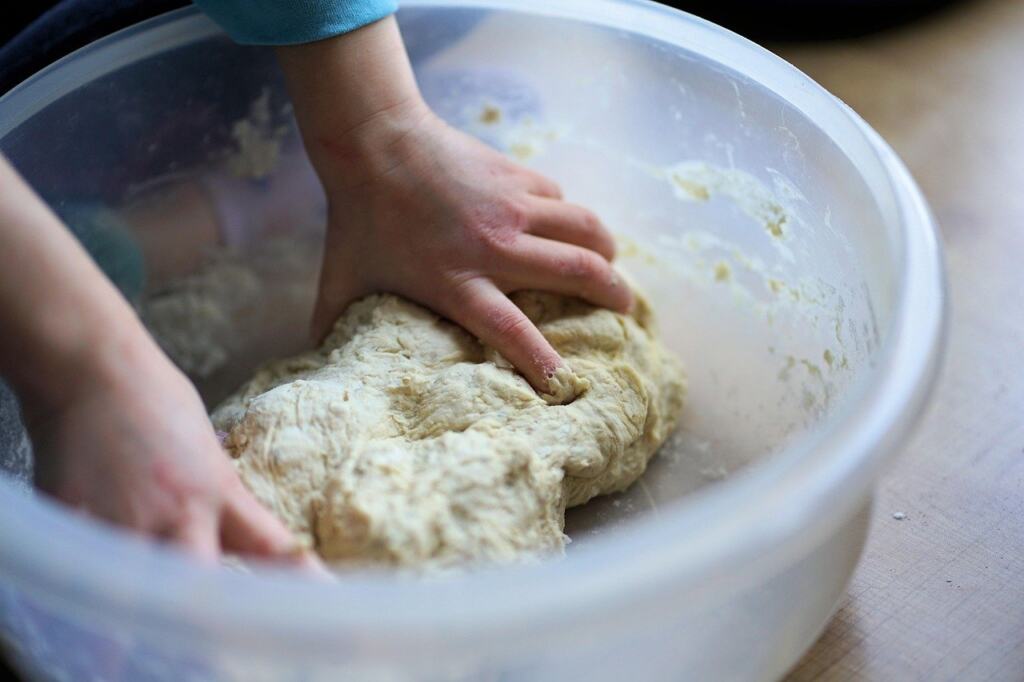
A dough that is still ragged or tearing after the full time is probably too stiff, which points to lower hydration. Next time, hold back less water. A dough that sticks to the counter and will not form a ball sits on the wetter end of the range, so give it a few more minutes of kneading before you decide anything.
Proofing at room temperature or in the fridge
Proofing times vary between reliable recipes, so judge the rise by volume. Sally’s Baking Addiction sets the dough aside for about 90 minutes. King Arthur says 1 to 2 hours, “whatever fits your schedule.” Gordon Ramsay’s recipe allows 1 hour 30 minutes at room temperature or until doubled in size. JoyFoodSunshine says you can let the dough rise for 10 minutes or up to it doubling in size, which it puts at 60 minutes. A warm kitchen will land at the short end, so go by whether the dough has doubled.
Choosing between same-day and overnight
| Method | Time | Planning use |
|---|---|---|
| Room-temperature rise | About 90 minutes (Sally’s Baking Addiction); 1 to 2 hours (King Arthur) | Best for a same-day pizza; start the dough in the afternoon. |
| Overnight in the refrigerator | Overnight | Suits a pizza made the next day; the dough is ready when you are. |
| Rise, deflate, then chill | One room-temperature rise, then overnight in the fridge | King Arthur’s route when you want the dough to start rising before it goes cold. |
Times come from Sally’s Baking Addiction and King Arthur Baking.
Yes, you can refrigerate the dough overnight. JoyFoodSunshine says to cover it and store it in the refrigerator until ready to use, up to overnight. If you chill it after a first rise, deflate it first and cover it, as King Arthur directs. Let a chilled dough sit out briefly before shaping if it feels stiff.
A simple pizza sauce
A simple pizza sauce needs only a handful of pantry items and a blender. Sally’s Baking Addiction makes its homemade sauce by blending these ingredients:
- Tomatoes: one 28-ounce can of San Marzano tomatoes.
- Olive oil: 1 Tablespoon.
- Salt: a pinch.
- Garlic: 2 minced cloves.
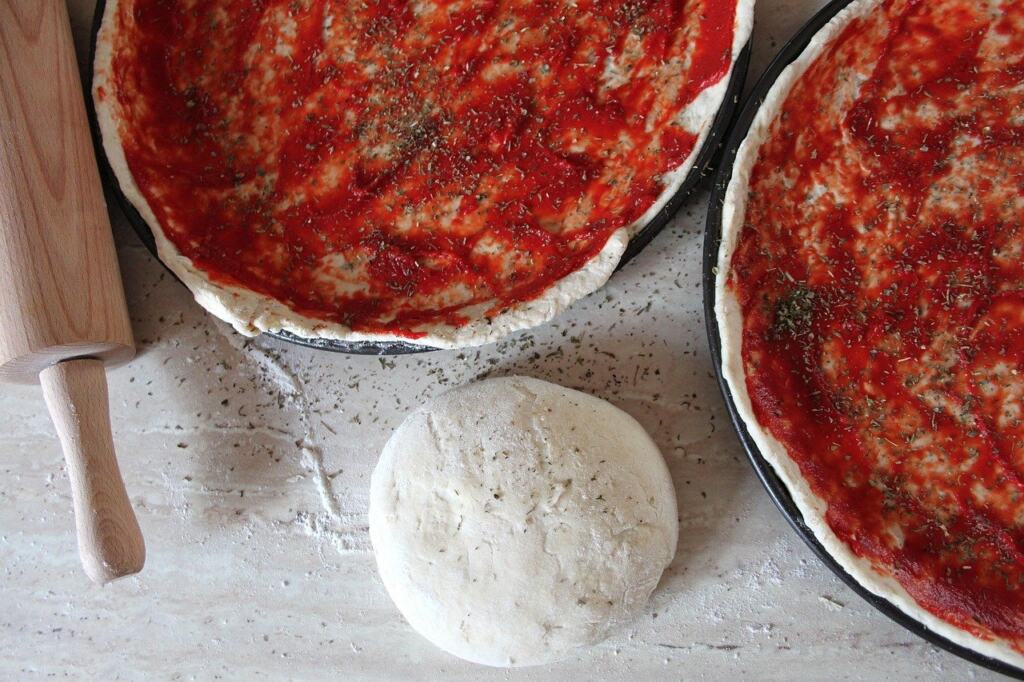
Keep the sauce plain so the crust stays the star. Spread it over the shaped dough just before baking, and leave the dough’s edge bare so it can puff.
Shaping and baking
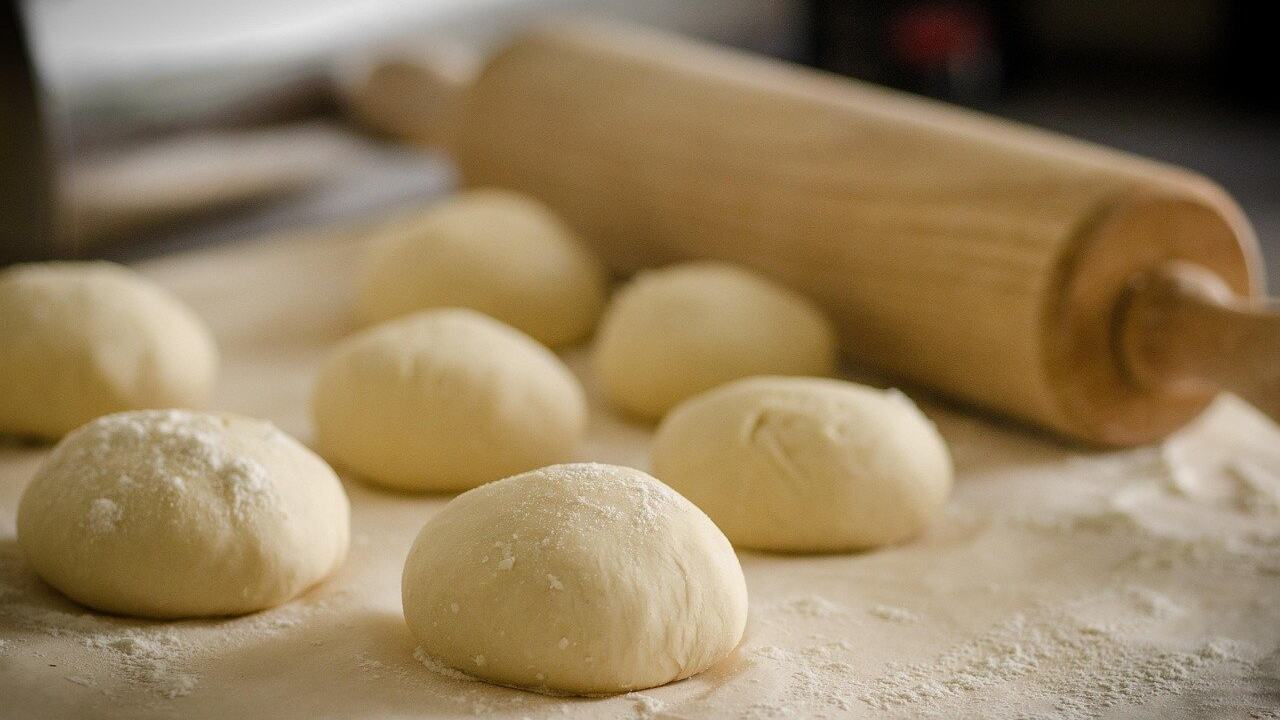
Shape each portion into a round with your hands or a rolling pin, working from the center outward. The picture below shows a dough sheet flattened beside a rolling pin and two dough balls.
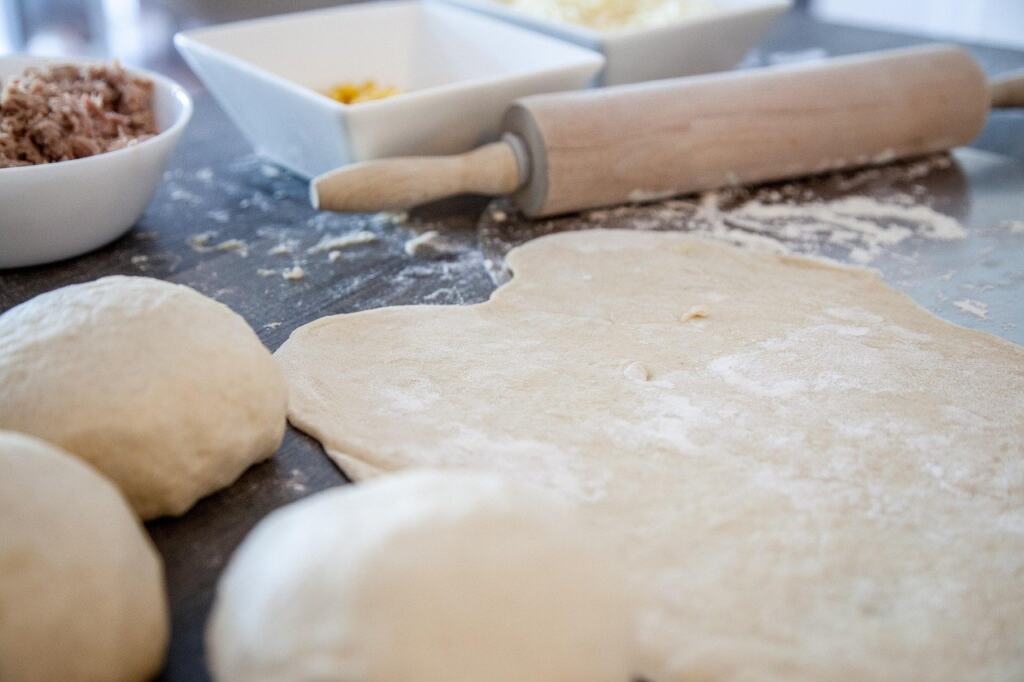
Oven temperature depends on your equipment. King Arthur preheats the oven to 450°F, or uses a stone or steel if you have one, and bakes for 15 to 20 minutes until golden brown. JoyFoodSunshine preheats its pizza stone at 500°F (260°C) for at least 10 minutes and then bakes for 12-15 minutes, until the cheese is bubbly and the crust is golden. Sally’s Baking Addiction bakes at a very high temperature for only about 15 minutes. Without a stone, use the lower temperature and the longer time range. With a well-heated stone, start checking at the shorter end.
When the dough misbehaves
Work up this ladder only as far as you need to.
- Dough barely rose: check the water temperature first. Water above the ceiling given earlier kills yeast, so start a fresh batch with cooler water rather than waiting longer.
- Dough tore and snapped back: it is on the firm, elastic side. Rest it, and increase the water percentage on the next batch.
- Dough stuck to everything: it is on the sticky, slack side. Knead a little longer, and lower the water percentage next time if it stays that way.
- Crust is pale or soft: bake closer to the longer time and higher oven temperature for your equipment.
For another from-scratch weeknight project, see our homemade ramen recipe.
Frequently asked questions
Can I use all-purpose flour instead of bread flour?
Yes. Bread flour makes a chewier crust, and Sally’s Baking Addiction notes you can substitute it for all-purpose. If your flour is bleached, bleaching strips away some protein, which changes how much water the flour absorbs, so watch the dough’s texture and adjust the water.
Why does the dough include sugar?
One Tablespoon of sugar increases the yeast’s activity and tenderizes the dough, according to Sally’s Baking Addiction.
Can I use store-bought sauce?
Yes. Sally’s Baking Addiction uses 1 cup (250g) of store-bought pizza sauce per recipe as an alternative to the homemade version.
Do I need a pizza stone?
No. JoyFoodSunshine bakes on a preheated pizza stone or a baking pan, and King Arthur says to use a stone or steel only if you have one.