| Symptom | First action | Planning use |
|---|---|---|
| Noodles snap or break in the wok | Buy rice sticks 2 to 3 mm (0.1 inch) thick and avoid wider ones | Check the width on the packet before you shop. |
| Noodles turn mushy or fall apart | Soak them in water instead of boiling, even if the packet says to boil | Start the soak before you touch the stove. |
| Noodles clump into a block | Drain, rinse quickly and get them into the pan within 5 to 10 minutes | Have the sauce mixed and the wok hot before draining. |
| Noodles are still firm in the pan | Add 1 teaspoon water and keep tossing | Under-soaking is easier to fix than over-soaking, so stop the soak early. |
| No tamarind in the cupboard | Mix the ketchup-based sauce described below | It replaces the whole sauce, so decide before you start measuring. |
The figures follow RecipeTin Eats’ chicken pad thai method and the Thai Kitchen noodle kit directions published by Beyond Celiac.
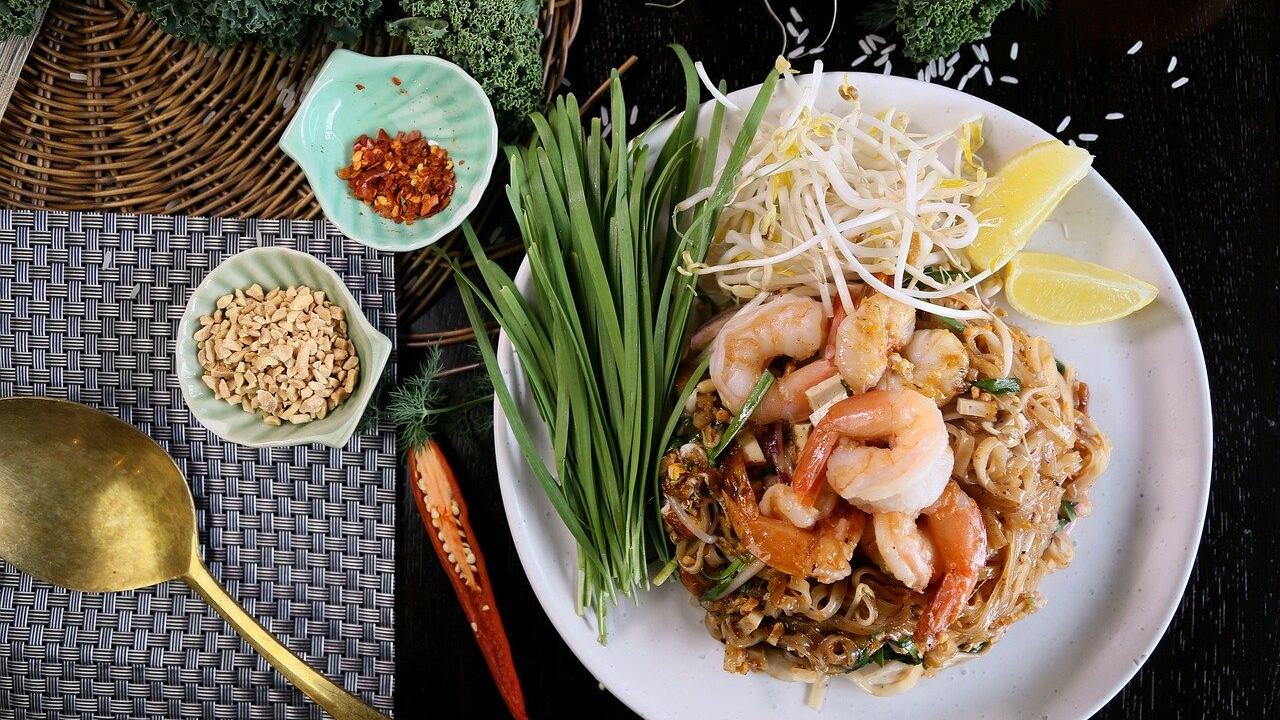
This pad thai recipe centres on a sauce balanced from tamarind, fish sauce, sugar and oyster sauce, and on rice noodles that are soaked rather than boiled. It suits an ordinary home wok or a large non-stick pan.
It sits among our international dinner recipes. If you are planning a wider menu, the lamb biryani recipe makes a very different main, and our slow cooker recipes cover the hands-off end of the week.
Sauce ingredients and balance
Pad thai sauce is made with fish sauce, oyster sauce, brown sugar and tamarind, as RecipeTin Eats describes it. The sauce decides whether the plate tastes like pad thai, so measure it into a bowl before the wok gets hot. For a pan serving 2 to 3 people, that recipe uses these amounts:
- Tamarind: 1 1/2 tbsp tamarind puree, not concentrate. The two are not interchangeable at the same volume, so read the jar before measuring.
- Brown sugar: 3 tbsp, packed. It is the largest measure in the bowl, which is why the sauce should be tasted and not simply poured in.
- Fish sauce: 2 tbsp, which supplies the salty, savoury backbone.
- Oyster sauce: 1 1/2 tbsp, matching the tamarind in volume.
Palm sugar is the other sweetener cooks reach for. One Bite Unite pad thai recipe simmers 16 pieces of palm sugar, each about 2 inches in diameter, in 2 cups of water as part of a larger-batch sauce. That is a different scale from the tablespoon amounts above, so use it as a method for a bigger batch and keep the tablespoon measures for a single pan.
Tamarind and fish sauce swaps
Tamarind is the swap most home cooks need, and there are two workable routes. Fish sauce is a different story, because nothing replaces it.
When you have no tamarind paste
- Rice vinegar: Tastes Better From Scratch builds its sauce with 2 tablespoons of rice vinegar and says that 2 tablespoons of tamarind paste can take its place for a more authentic sauce. Read the other way, the same volume of rice vinegar stands in for tamarind paste. This suits a cook who already has the other sauce ingredients measured and only the tamarind is missing.
- Ketchup-based sauce: RecipeTin Eats offers a complete tamarind-free sauce of 1 tbsp ketchup, 2 tbsp brown sugar, 2 tbsp fish sauce, 2 tsp oyster sauce, 1 tsp dark soy sauce and 2 tbsp rice vinegar. It replaces the whole sauce, so do not add it on top of the tamarind version.
Choose the vinegar swap when you are adapting the tamarind sauce above, and the ketchup mixture when you want a single self-contained sauce from ordinary pantry bottles.
When you have no fish sauce
Glebe Kitchen is blunt on this point: there is no substitute for fish sauce in pad thai, and soy sauce is not one. If a bottle is not in the house, buy one before cooking, or make the vegetarian version below knowing that the flavour will be different.
Choosing and soaking rice noodles for pad thai
The best rice noodles for pad thai are dried rice sticks 2 to 3 mm (0.1 inch) thick, according to RecipeTin Eats, which also advises avoiding wider rice noodles because they are more prone to breaking. Every noodle problem comes back to soaking, so diagnose by symptom.
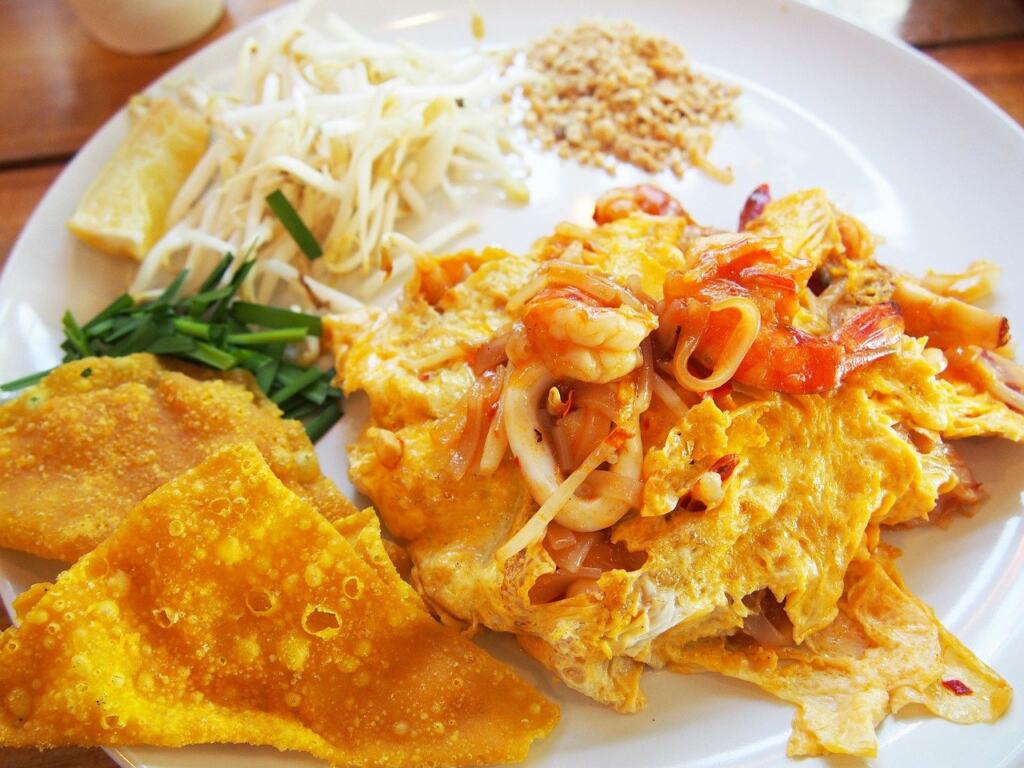
- Symptom: mushy or disintegrating noodles. Do not boil them. RecipeTin Eats warns that following boiling directions on the packet makes Erawan-style rice sticks disintegrate in the pan, and Glebe Kitchen says boiling water makes mushy noodles. Soak in water instead, and let the wok finish the cooking.
- Symptom: clumping. For 2 to 3 mm sticks, RecipeTin Eats soaks them for 5 minutes in hot water, then drains and quickly rinses. It also says not to leave soaked noodles sitting for more than 5 to 10 minutes, so time the soak to the moment the wok is ready.
- Symptom: hard centres. The Thai Kitchen noodle kit directions let the noodles stand for 6 to 8 minutes in hot water until soft but firm, then rinse. If they are still too firm in the stir-fry, the same directions add 1 teaspoon of water.
- Symptom: a longer soak is called for. Glebe Kitchen soaks in hot water for 30 to 45 minutes, aiming for about 85 percent of the final texture, so the noodles are not fully soft before they hit the pan.
These times differ because brands and thicknesses differ. Take your packet as the starting point and use the shared target of soft but still firm. Noodles are not meant to be fully tender when they leave the water, because the wok will soften them further. The soak is also the one part of this recipe that does not depend on your burner.
Stir-frying in a home wok
You do not need a restaurant burner. Glebe Kitchen heats a well-seasoned wok or a large non-stick frying pan over medium-high heat, which any home hob can manage. Sequence matters more than raw power, so work in this order:
- Drain the noodles and have the mixed sauce beside the stove.
- Heat the wok or large non-stick pan over medium-high heat.
- Cook the tofu or other protein first, then the egg.
- Add the noodles and the sauce, and toss until every strand is coated.
- If the noodles are still too firm, add water a teaspoon at a time, as the Thai Kitchen directions suggest.
Noodles that were soaked rather than boiled need this gradual finish, and keeping a small cup of water beside the stove makes it easy to rescue a dry pan without drowning the sauce.
Tofu and vegetarian pad thai
For vegetarian pad thai, use tofu, leave out the egg and replace the fish sauce with more soy sauce, as Tastes Better From Scratch suggests. These swaps change the flavour, since fish sauce has no true substitute, so expect a milder, less savoury plate and adjust the tamarind and sugar by taste. The base sauce above also calls for oyster sauce, which is another animal-derived ingredient, so a strict vegetarian needs to deal with that too.
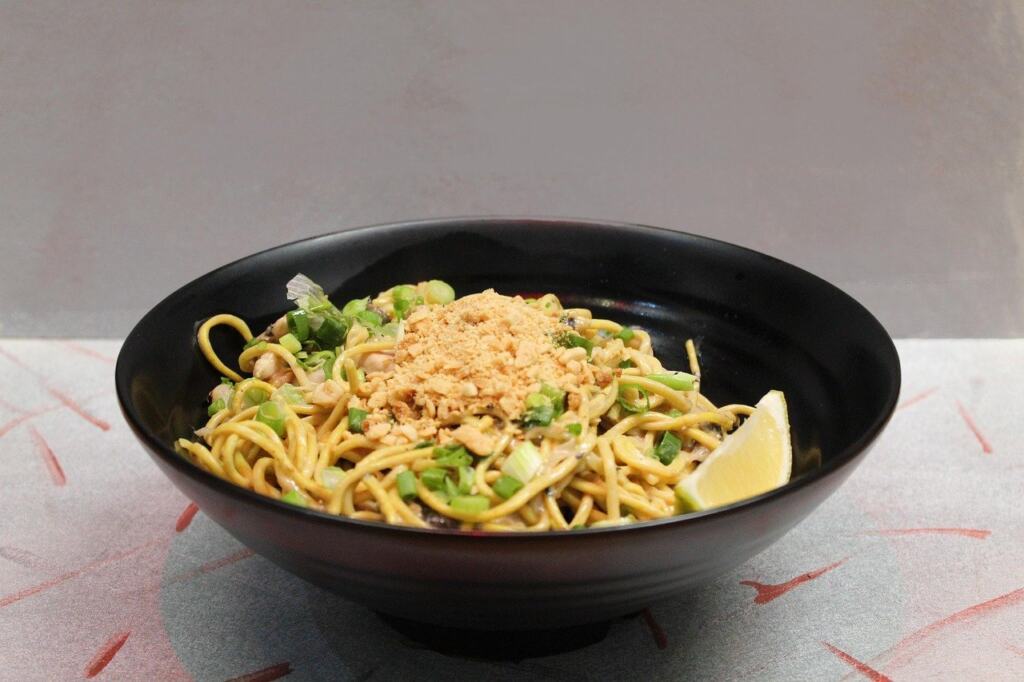
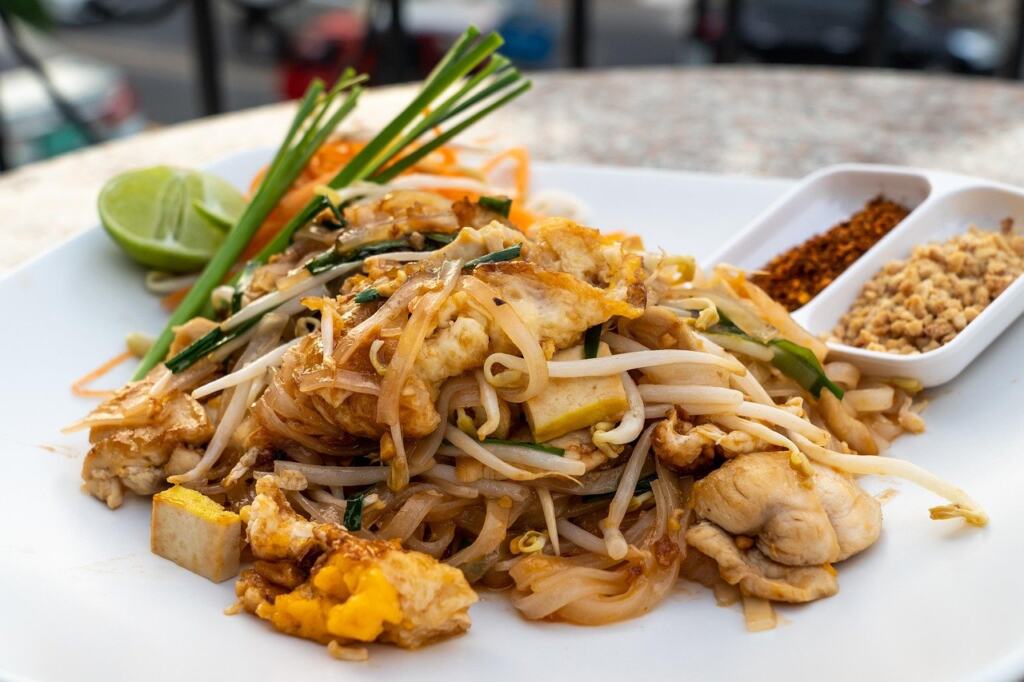
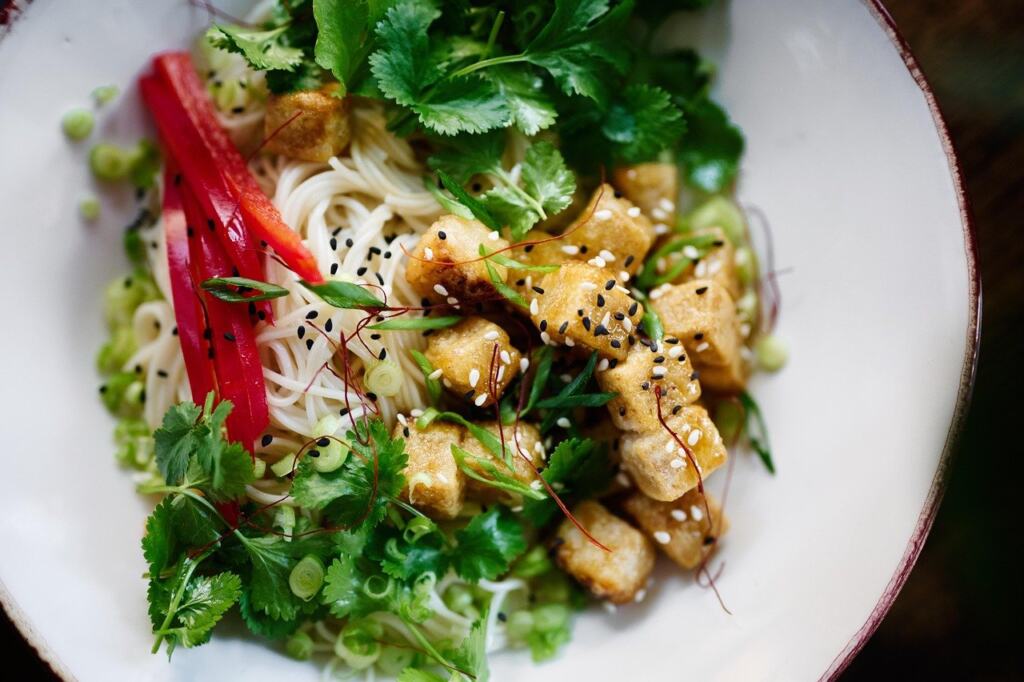
Tofu choice decides whether the dish holds together. RecipeTin Eats recommends the firmest plain tofu you can find, and warns that soft tofu disintegrates in the pan. Cook it first, as in the order above, and handle it gently once the noodles are in.
Frequently asked questions
| Question | Answer |
|---|---|
| What if I only have tamarind concentrate? | Concentrate is stronger than puree. RecipeTin Eats says to use about 1/3 of the puree amount. |
| How many servings can I cook at once? | No more than two servings at a time, according to Glebe Kitchen. For a bigger group, cook in batches rather than crowding the pan. |
| Can I soak the noodles in room-temperature water? | Yes, for some brands. RecipeTin Eats soaks Erawan rice sticks in room-temperature tap water for 40 to 45 minutes, until silky but still a touch firm. |