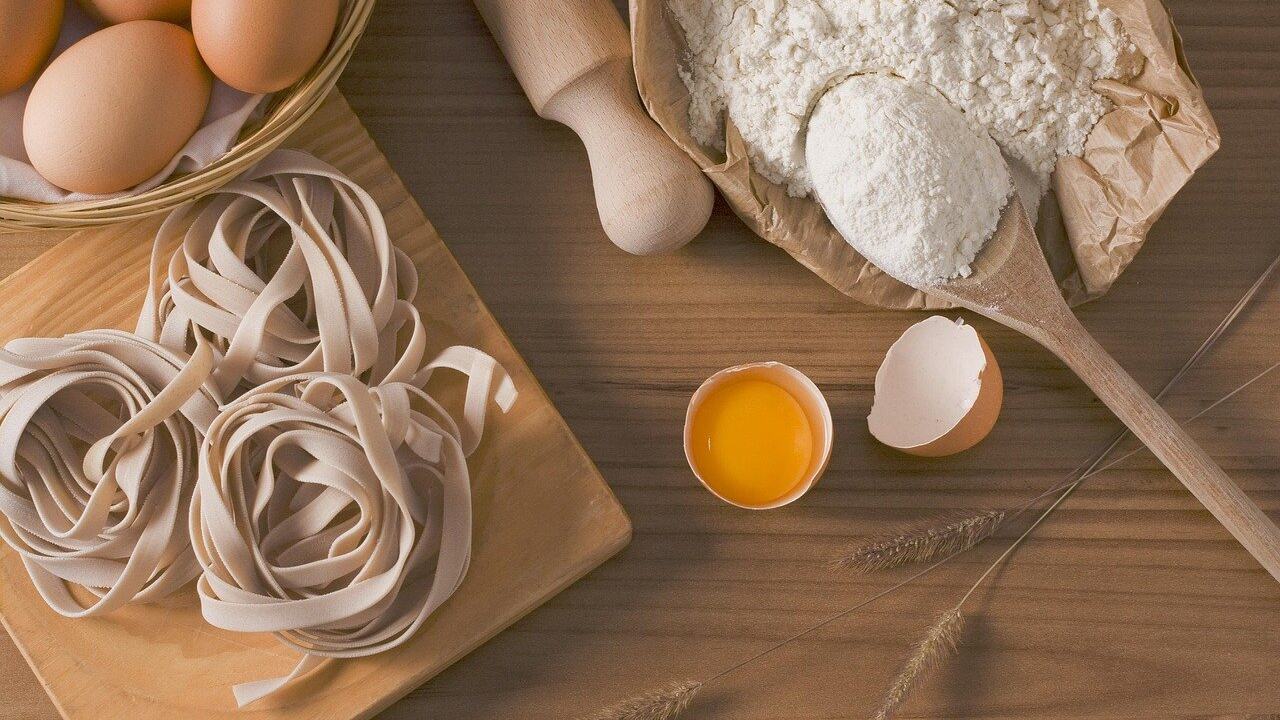
You have flour, eggs and a rolling pin but no pasta machine. Homemade pasta recipes still work by hand: mix a stiff egg dough, knead it smooth, rest it, then roll and cut.
Quick answer: use 1 large egg for every 100 g (3.5 oz) of 00 flour, knead until smooth, rest the dough wrapped, then roll it with a rolling pin. Start there. Add semolina, an eggless dough or a new shape only when you want a different texture. For more dinners built on the same basics, see our international dinner recipes.
Mixing the dough
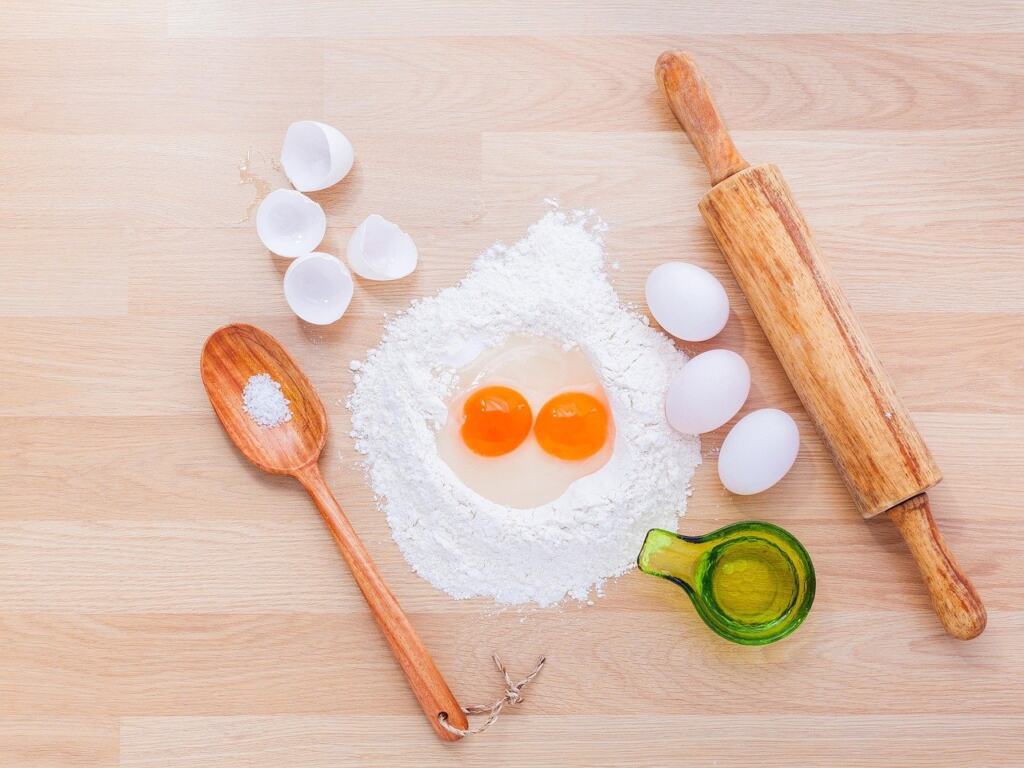
Pasta dough is flour bound with eggs and a little oil or salt. 101 Cookbooks puts the whole starting kit as flour, two eggs, a splash of olive oil and a bit of salt. You need a clean work surface, a fork and your hands.
Flour and egg quantities
The simplest rule is a fixed egg-to-flour proportion that you scale up. Two published starting points show how far the recipes can differ while giving the same kind of dough.
| Dough | Quantities | Planning use |
|---|---|---|
| Egg-to-flour rule (00 flour) | 1 large egg per 100 g (3.5 oz) of 00 flour | Scale this up or down to the number of eggs you have. |
| Larger batch (00 flour) | 400 g 00 flour (about 3 cups, spooned and levelled) with 4 large eggs | Enough for filled pasta such as ravioli, or for several portions of cut ribbons. |
| All-purpose and semolina blend | 2 eggs, 1 cup all-purpose flour, 3/4 cup semolina flour and 1 1/2 tbsp olive oil; makes about 1 lb of dough | Use this when you only have all-purpose flour and want a firmer bite. |
Quantities come from Inside The Rustic Kitchen and Spoon Fork Bacon.
Choosing a flour
Inside The Rustic Kitchen recommends 00 flour for the best results when making pasta dough from scratch. If you do not have it, The House and Homestead notes that pasta is traditionally made with semolina but all-purpose flour is fine when you make your own. Semolina is worth adding when you want more bite, a point covered below.
Making the well
- Pile the flour into a mound on a clean surface and press a deep well into the centre.
- Crack the eggs into the well. Add the oil and salt if your recipe uses them.
- Break the yolks with a fork and slowly draw flour in from the inner wall of the well.
- Press everything together with your hands once the mixture is too thick for the fork.
Kneading and resting
Knead for roughly 8 to 10 minutes, and use how the dough feels as your stopping point rather than the clock. Spoon Fork Bacon describes the finished dough as very tight, bouncing back when gently pressed. Inside The Rustic Kitchen asks for 10 minutes, until the dough is smooth and pliable.
Then wrap the dough and let it rest. Spoon Fork Bacon rests it for about 20 minutes, and Inside The Rustic Kitchen for 30 minutes out of the fridge. Choose the longer rest if you have the time, and keep the dough wrapped throughout.
Rolling and cutting by hand
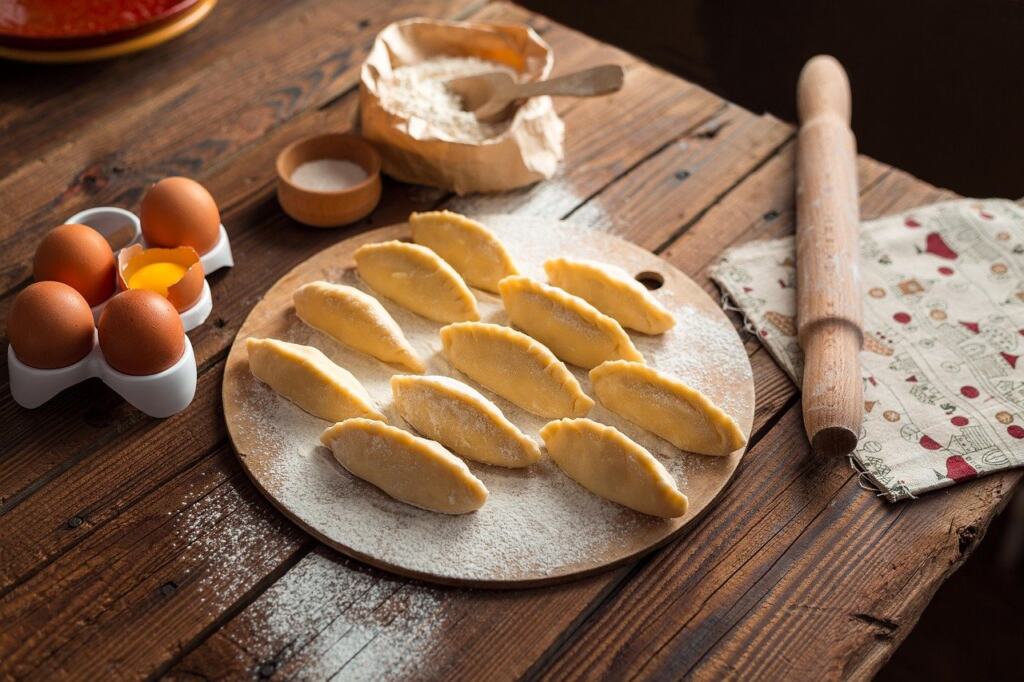
A machine is not required. Spoon Fork Bacon says these tools are not necessary to make wonderful pasta at home, and another cookbook site confirms that a basic rolling pin is enough. America’s Test Kitchen goes further and shapes pasta entirely by hand, with no food processor, mechanical roller or even a rolling pin.
The House and Homestead found that rolling and cutting by hand was more time-consuming than difficult. Plan for that extra time. You can also shape the dough in stages and keep the unused portion wrapped.
- Dust the surface lightly with flour and roll the rested dough out with the rolling pin, working from the centre outward.
- Keep rolling until the sheet is thin and even.
- Fold the sheet loosely and slice it into ribbons with a sharp knife for fettuccine or tagliatelle.
- Shake out the ribbons and gather them into loose nests.
America’s Test Kitchen says consistent width matters more than consistent length for hand-shaped strands, so check your knife cuts for even width. If you do own a roller, Inside The Rustic Kitchen takes lasagne, tagliatelle or pappardelle sheets to the second-last setting, number 8.
Semolina and eggless doughs
Move to semolina when the basic egg dough feels too soft for your taste. 101 Cookbooks notes that durum wheat is a hard wheat and that semolina gives a stiffer dough. Spoon Fork Bacon blends it with all-purpose flour for a firm texture, and America’s Test Kitchen found that the blend gave a nubbly, pale yellow, complex dough.
Semolina changes cooking time as well. 101 Cookbooks advises increasing the cooking time as you increase the amount of semolina, so test a strand rather than relying on your usual timing.
Dough without eggs
Escalate again if you want a dough without eggs. 101 Cookbooks combines 200 g of 00 flour, 200 g of semolina, 200 g of warm water and 1 teaspoon of fine sea salt, then kneads for 7 to 10 minutes until silky smooth and elastic. America’s Test Kitchen found about 7 minutes was a sweet spot for a flour-and-water pici dough. This route also suits cooks working from easy vegetarian recipes who want to leave out the eggs.
Drying before cooking
Let the cut pasta hang or rest for a short time before it goes into water. The House and Homestead lets pasta hang to dry for about 15 to 20 minutes before cooking or storing. Use that window to bring your water to the boil and prepare the sauce.
Using the dough in other dishes
Once the hand-made sequence feels familiar, it carries over to other dishes. The technique stays the same and you adjust the shape and the sauce.
Spaghetti carbonara
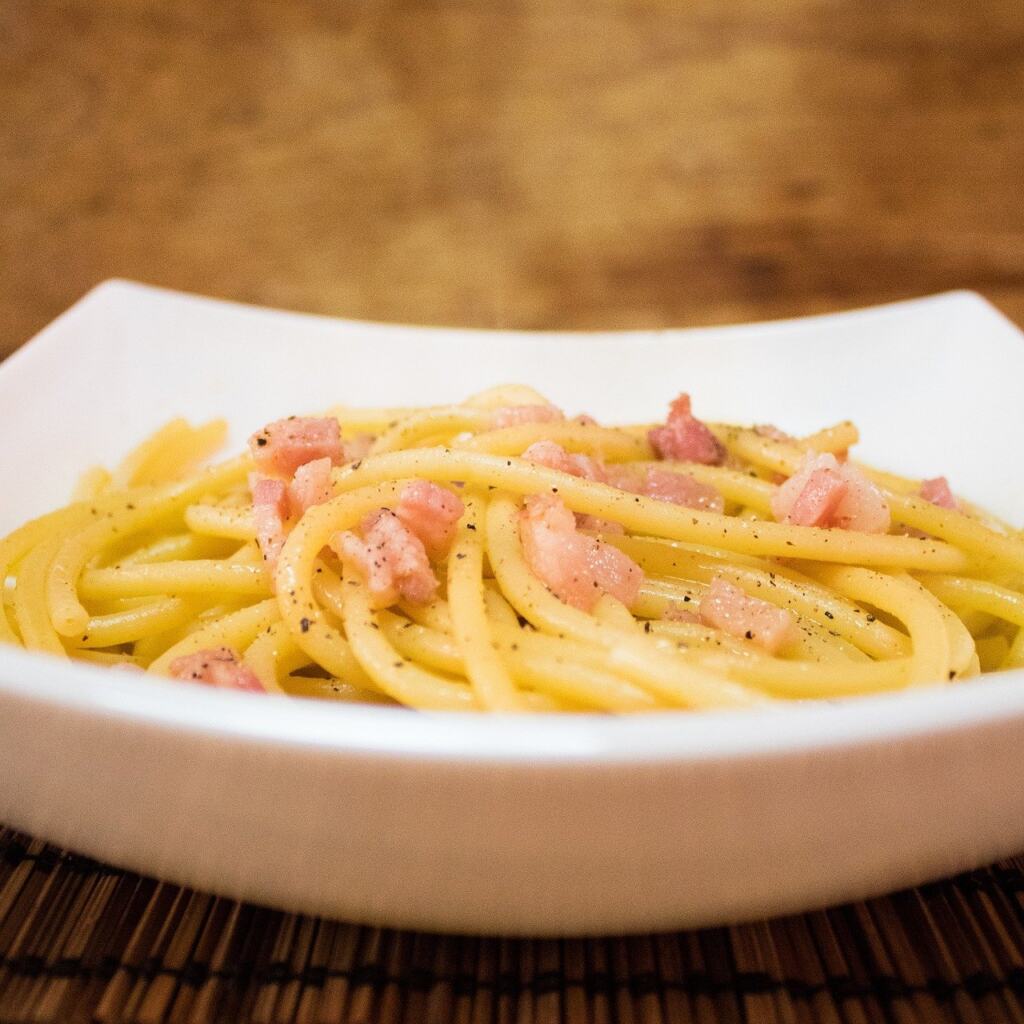
Cut your own strands for carbonara, a dish of egg sauce, cured pork and black pepper tossed through pasta. Aim for even width rather than perfect length, as noted above. Cook a test strand first, because a dough with extra semolina needs longer in the water.
Gnocchi at home
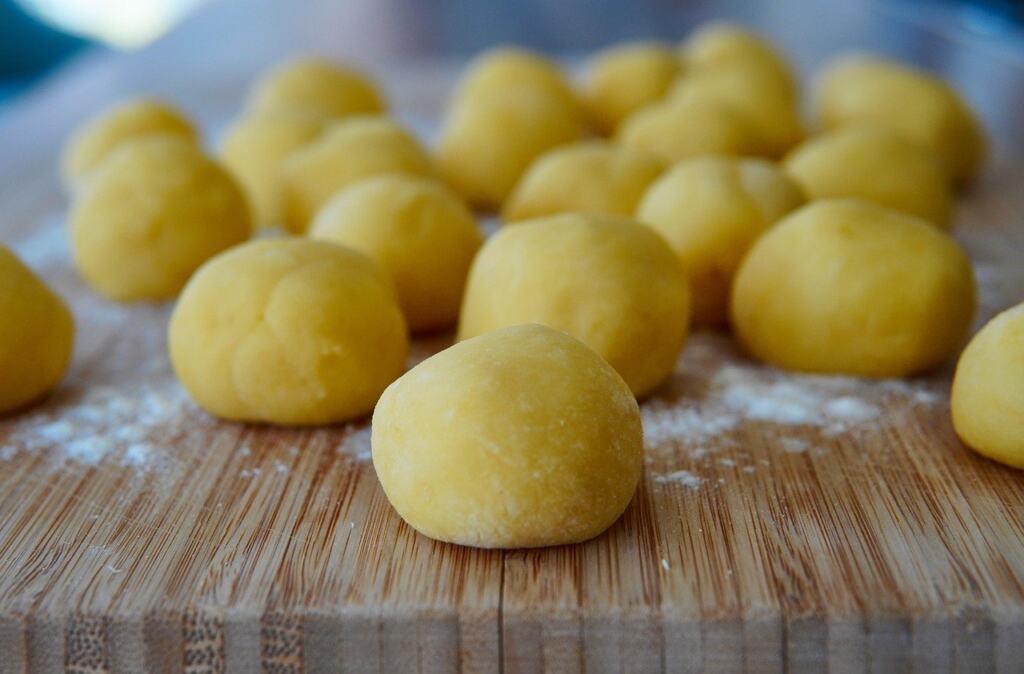
Potato gnocchi use a different dough from this egg pasta. They are formed into small pieces, often rolled over a fork, rather than rolled into sheets and cut. Keep the work surface lightly floured, as with the ribbons, and shape the pieces once the dough is ready.
Baked pasta
For baked dishes such as lasagne, roll the dough into wide sheets. With a machine, that means the second-last setting, number 8, according to Inside The Rustic Kitchen. By hand, roll to an even thickness across the whole sheet. Fresh strands also suit brothy dishes, which we cover in our homemade soup recipes.
Frequently asked questions
How long should fresh pasta be cooked?
There is no single time that fits every dough. Cooking time depends on the flour you used, and 101 Cookbooks says to lengthen it as you add more semolina. Start tasting a strand early and drain it as soon as it is tender.
How long does homemade pasta keep?
For storage, Spoon Fork Bacon lets pasta dry in a cool, dry place for 24 hours. It then holds for up to 1 month if stored cool and dry.
Does egg size change how much flour I need?
Yes. Inside The Rustic Kitchen says small or medium eggs need less flour than large eggs, so add flour gradually and judge by feel.
Can you make pasta dough without a pasta machine?
Yes. A basic rolling pin and a knife are enough, as described in the hand-rolling section above.