| Reader situation | Start with | What it is | Planning use |
|---|---|---|---|
| Learning how a meal is built | Rice, soup and banchan | The fixed core of a Korean table, with side dishes around the rice and soup | Read the table section first. It shows how individual dishes fit together. |
| Wanting a complete bowl | Bibimbap | Cooked rice mixed with seasoned vegetables, fried egg and minced beef | Choose it when you want rice and vegetables together in a single dish. |
| Exploring fermentation | Kimchi, doenjang, gochujang, ganjang, jeotgal | The fermented staples that carry Korean flavour | Buy the pastes and sauces ready-made, then learn how each is used. |
| Stocking a kitchen | Gochujang, gochugaru, doenjang, sesame oil, soy sauce | Chili paste and flakes, soybean paste, nutty oil and a salty sauce | These five cover most seasoning needs. |
| Cooking for company | Bulgogi and tabletop barbecue | Marinated beef, and meat grilled by diners and wrapped in lettuce | Pick it for a hands-on meal where everyone cooks at the table. |
Descriptions follow the Gateway Korea food overview and Firebird Tours’ Korean food guide.
Korean cuisine is built around cooked rice, soup and banchan side dishes, with fermentation behind much of its flavour. Choose the section below that matches how you plan to cook or eat.
For wider context, see our guide to popular dishes from around the world, where Korean food sits alongside other national cuisines.
If you want to understand the Korean table
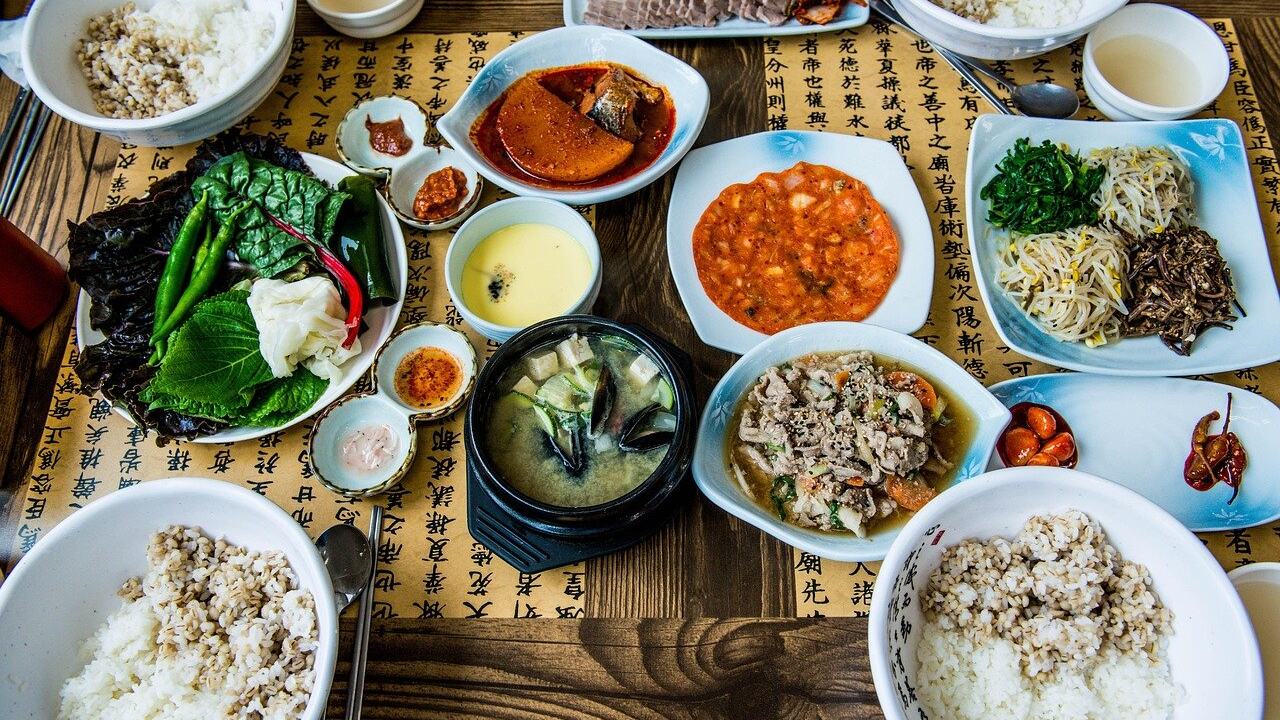
Korean meals follow a structure before they follow a recipe. The Gateway Korea overview of traditional food describes the hanjeongsik format as originally made up of cooked rice, soup and anywhere from three to five side dishes. The same source names fermentation as one of the key words for understanding traditional Korean food. Those two ideas, a fixed table and a fermented foundation, define the cuisine better than any single dish does.
Rice and bibimbap
Rice is the anchor of the meal, and bibimbap is the dish that puts it centre stage. The name literally means “mixed rice”. It is cooked rice served after mixing with seasoned vegetables, a fried egg and minced beef, according to Gateway Korea. It suits anyone who wants a complete bowl without arranging several dishes. Its limitation is that it is a single composed dish, so it shows less of the multi-dish structure than a full table does.
Soup and stew
Soup sits beside the rice as a fixed part of the format, and a stew can take that place on the table. A bowl of rice, a soup and a few side dishes reproduce the basic pattern at home without any special equipment. Treat the soup as part of the structure, not as an extra course.
Banchan
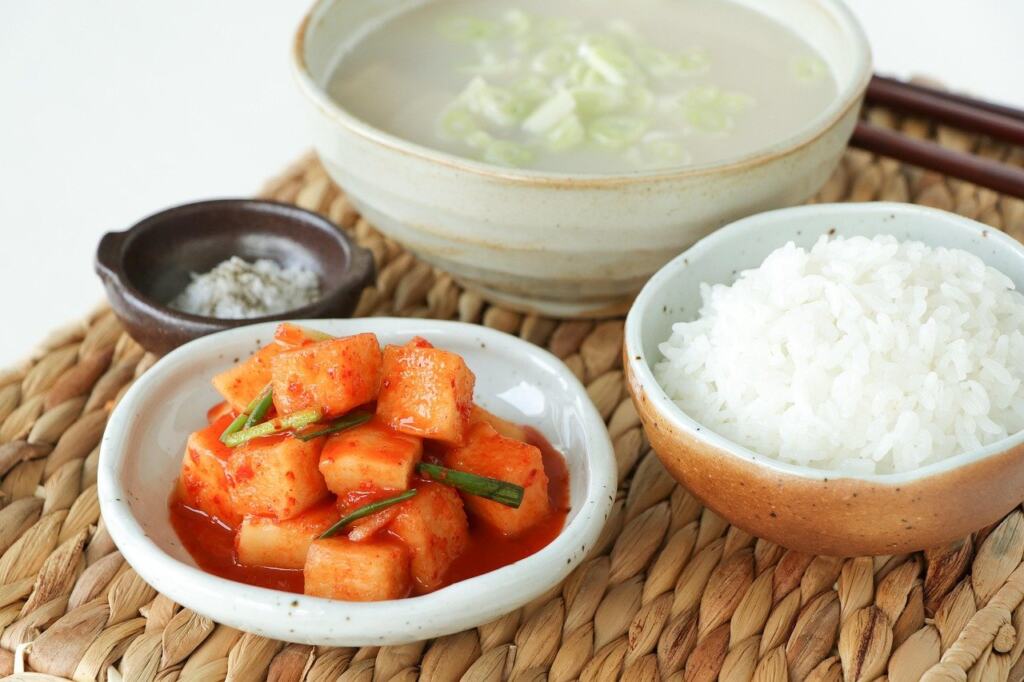
Banchan are the small side dishes served around the rice and soup. Firebird Tours places rice, soup and a colourful variety of banchan at the centre of the meal. Its examples range from pickled radish to seasoned spinach. The cuisine as a whole spans hundreds of dishes, soups, stews, vegetables and side dishes, as Seoul Mills notes, and banchan are the part of that range that arrives together on the table.
Typical banchan fall into a few groups that are easy to recognise:
- Kimchi: fermented vegetables, most commonly salted cabbage, and the best-known banchan.
- Seasoned vegetables: dishes such as seasoned spinach, dressed and served cold or at room temperature.
- Pickled vegetables: crisp, sharp dishes such as pickled radish that contrast with rice and soup.
To approximate a banchan spread, choose dishes that differ in colour and seasoning instead of repeating a single flavour.
If you want to cook from fermented foundations
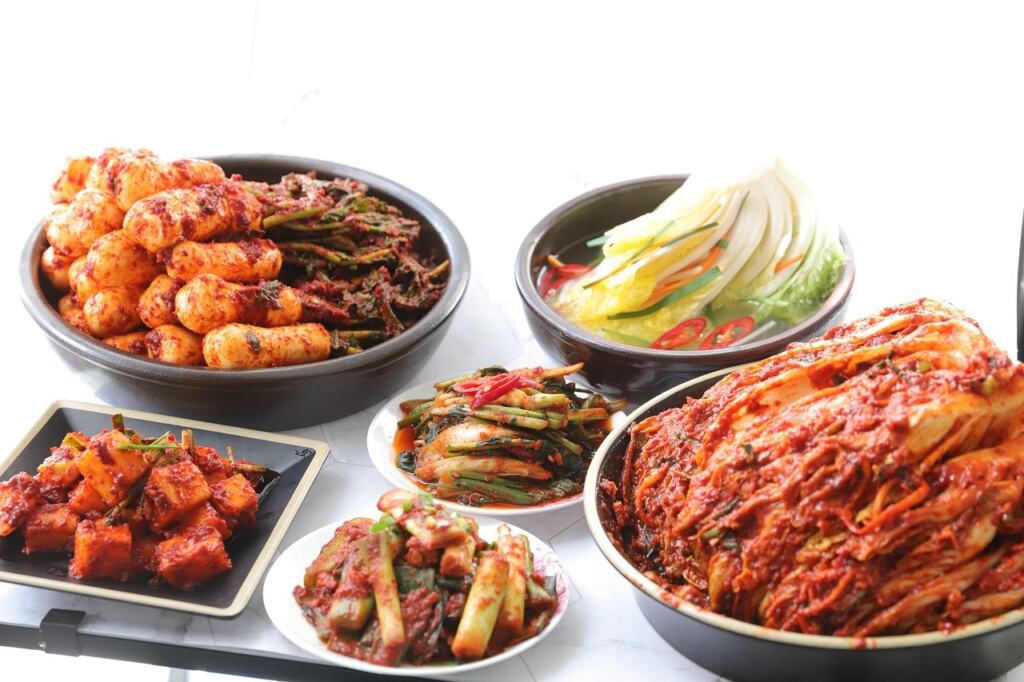
Fermentation is what links the table to the pantry. According to Gateway Korea, the foods that best represent Korea’s fermentation tradition are doenjang, ganjang, gochujang and jeotgal, and traditional fermented foods can take anywhere from several months to several years to ferment. That timescale is a good reason to buy these staples ready-made and put your effort into learning how to use them.
Kimchi
The most common kimchi is made by mixing salted white cabbage with kimchi paste, and it works as a side dish at nearly any meal. Its ingredients vary by region, local produce and tradition, so no two cooks make it exactly alike. Jeotgal, a fermented seafood, is an essential ingredient. The Codex Alimentarius Commission listed Korean kimchi in its internationally recognised standards in 2001, as Gateway Korea records. Kimchi suits anyone who wants a fermented food with obvious flavour. Expect variation between jars rather than a single standard taste.
Gochujang
Gochujang is a fermented mixture of soybean malt, salt and chili pepper powder, made with powdered rice and barley. It is the staple to reach for when you want chili heat that comes from a fermented base. Seoul Mills pairs it with gochugaru chili flakes as the core Korean chili seasonings. Use the paste where you need body and seasoning together, and the flakes where you want chili alone.
Doenjang
Doenjang is the fermented soybean paste. The prepared beans are left for about two to three months until fully fermented, and the solids are then brewed over five more months, according to Gateway Korea. That long process explains why doenjang is a pantry purchase and not a same-week project. It suits cooks who want a savoury soybean base.
Ganjang and jeotgal
Ganjang is soy sauce, and jeotgal is salted seafood fermented in a cool place. Together with the pastes above, they complete the four staples named by the Gateway Korea food overview. Ganjang is the easy entry point because it works as everyday seasoning. Jeotgal is more specialised and matters most to people who want to understand how kimchi gets its depth.
Onggi jars
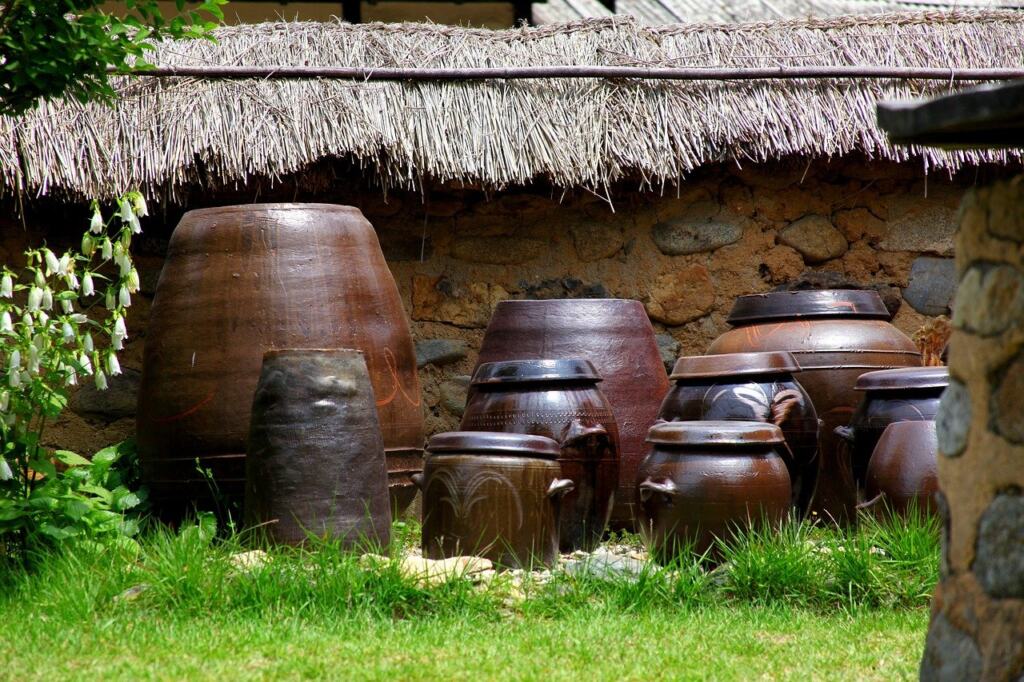
Onggi are the earthenware jars used to keep these foods. The large brown-glazed pottery jars known as jangdokdae hold soy paste, soy sauce and chili paste. Gateway Korea explains that Korean pottery jars allow proper ventilation, which makes them well suited to preserving fermented food. For a home cook, the jar matters less than the pastes inside it, but it shows why the tradition treats storage as part of fermentation.
If you are stocking a Korean pantry
A small set of ingredients covers most Korean seasoning. Seoul Mills highlights chili paste, chili flakes, sesame oil and soy sauce as the foundation of many dishes. Add doenjang from the fermented staples above and the pantry is complete for everyday cooking.
- Gochujang: chili paste for sauces and seasoning. Choose it when you want heat with depth.
- Gochugaru: chili flakes. Choose them when you want chili without the paste’s other flavours.
- Doenjang: soybean paste, named by Gateway Korea among the main fermented staples.
- Sesame oil: its nutty, roasted flavour is the base for many Korean stir-fries and other dishes.
- Soy sauce: supplies the saltiness in many stir-fries.
Buy the pastes first if you are unsure where to begin, because they are the hardest ingredients to substitute.
If you want to grill at the table
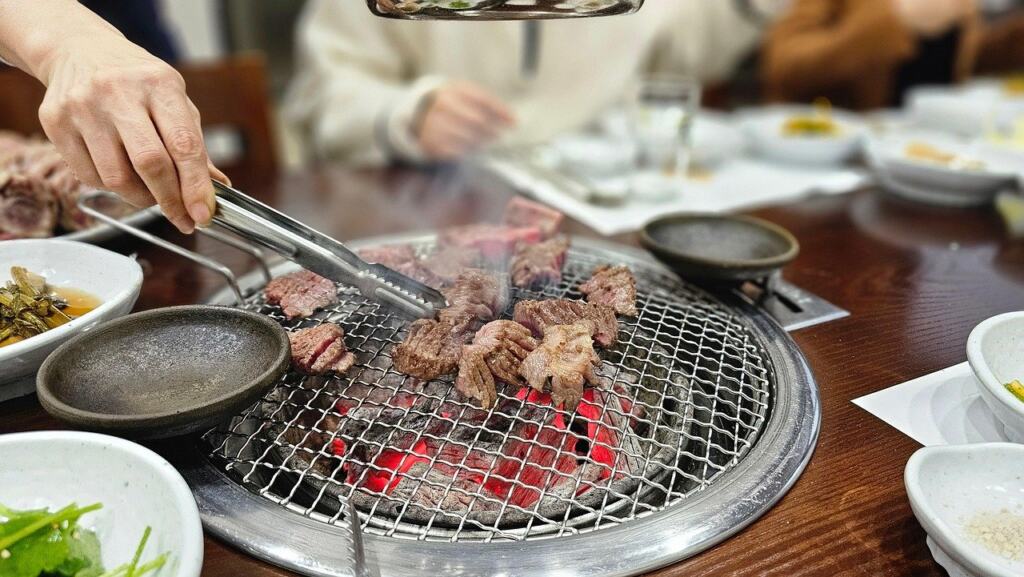
Korean barbecue is a meal you cook as you eat. Firebird Tours describes the format: you grill the meat yourself, then wrap it in lettuce with garlic, dipping sauce and rice. It suits groups who like a hands-on meal. It is a poor fit if you want a plated dish that arrives ready to eat.
- Grill the meat at the table until it is cooked.
- Place a piece in a lettuce leaf.
- Add garlic, dipping sauce and rice, then wrap and eat.
Bulgogi
Bulgogi literally means “fire meat”. It is beef marinated in soy sauce, sesame oil and garlic, then grilled, according to Gateway Korea. The marinade is built from pantry staples, including the fermented soy sauce, which ties the grill back to the fermented foundations above. Bulgogi suits cooks who want a dependable, familiar flavour and are happy to marinate ahead.
If you are comparing national cuisines
Korean cooking rewards a structured approach: learn the table, then the pantry, then the grill. If you are exploring other cuisines, thai cuisine and greek cuisine have their own guides on this site.
Frequently asked questions
| Question | Answer |
|---|---|
| How long does kimchi ferment? | Kimchi can be eaten fresh but is normally eaten after fermenting for several days. Mugeunji, a ripe kimchi, ferments over one year, according to Gateway Korea. |
| Is banchan refilled during a meal? | Banchan are usually refilled at no cost, according to Firebird Tours. |
| What links bibimbap to Jeonju? | The dish is closely related to Jeonju, which UNESCO has designated a City of Gastronomy, as Gateway Korea notes. |
| What is namul? | Namul is a general term for a Korean seasoned vegetable dish, as Seoul Mills explains, and it is one of the typical banchan categories. |